
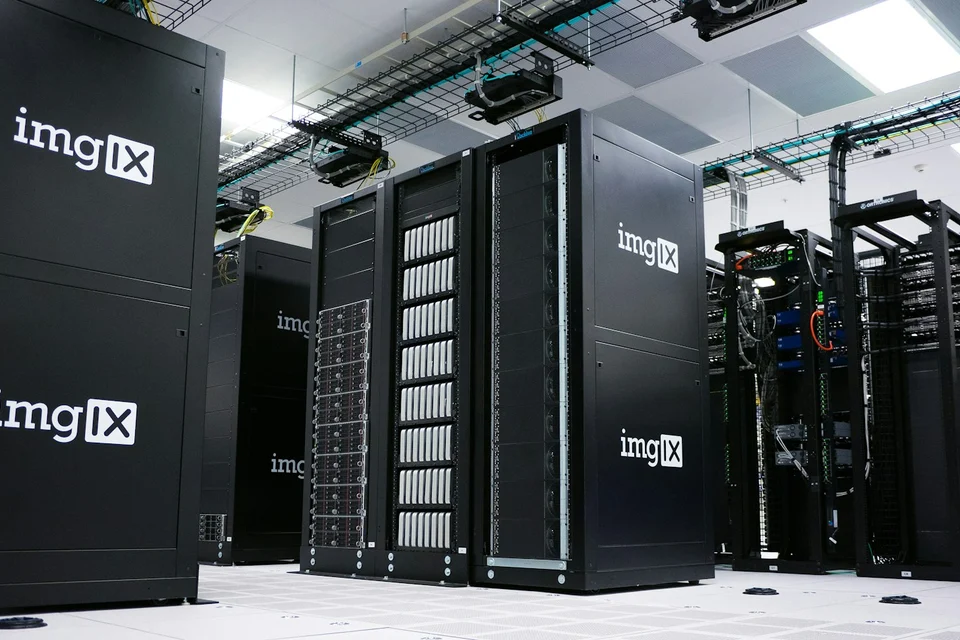
When you read that AI will consume an enormous amount of electricity, the first question should be what the number includes. All data centres, AI-focused facilities, one company's operations and a single model request are different things.
The second question is whether the number describes a measurement or a forecast. Mixing those categories can make a plausible projection sound like a present-day fact. To understand the energy issue, keep the boundary, year and location attached to the figure.
Start with the right boundary
The IEA's updated Key Questions on Energy and AI outlook projects global data-centre electricity consumption rising from 485 terawatt-hours in 2025 to about 950 terawatt-hours in 2030, around 3% of projected global electricity demand. It separately describes faster growth in AI-focused data centres. These are not interchangeable categories. IEA's updated outlook.
The 2030 number is a projection, and the IEA discusses uncertainties including infrastructure constraints and the economics of investment. It is not a meter reading from the future. Nor does it mean that every unit of electricity consumed by a data centre is used for generative AI.
When sharing an energy statistic, include enough context for another reader to understand what it counts. “Data-centre electricity, worldwide, projected for 2030” is a much more informative description than “AI uses this much power”.
Electricity and emissions answer different questions
Electricity consumption describes energy use. Associated emissions depend partly on how that electricity is produced and on what an assessment includes. Two facilities consuming the same amount do not necessarily have the same emissions profile.
The IEA's 2025 climate analysis explicitly distinguishes indirect emissions from data-centre electricity consumption and notes that AI is only a subset of those workloads. It also discusses possible emissions reductions from AI applications in other sectors. Those potential benefits should not be counted as automatic offsets against every AI service's footprint. IEA analysis of AI and climate.
For a useful comparison, ask whether the reported footprint covers electricity alone, equipment production, cooling, backup power or a wider lifecycle. A narrow estimate can still be informative, provided it is labelled clearly and compared with a similarly defined estimate.
Be cautious with a universal “per prompt” number
A single figure for the energy cost of asking AI a question is attractive because it feels tangible. Before applying it to your own use, ask what request was measured, what system handled it and how the calculation allocated shared infrastructure.
A short classification task is not the same operation as generating a long video or repeatedly searching and reasoning through documents. Treating every interaction as one identical “prompt” conceals the work being performed.
If a provider gives a per-request estimate, look for the method and range of cases. If those details are absent, keep the number as an estimate with unknown applicability. Do not multiply it across unrelated products and present the result as a measured total.
This is also why the length of the visible answer cannot tell you everything about the resources consumed to produce it. The user sees a result, while the estimate may need to account for several stages of processing.
Evaluate a useful task, not just an interaction
For a team choosing an AI workflow, compare the resources used to deliver an acceptable result. Define the job first: for example, producing a verified summary of ten documents. Then count unsuccessful attempts, repeated processing and the human checking needed before the summary can be used.
Consider a hypothetical workflow that generates five complete reports before a person chooses one. Another workflow first agrees an outline and generates one report with a focused correction. Without measured energy data, you cannot assign a credible carbon saving to the second approach. You can still identify duplicated work and test whether it can be removed without reducing quality.
That is a useful operational question because it can be answered from your own records. A precise environmental claim requires additional evidence.
Ask better questions of suppliers
Request the scope and date of any environmental metric, whether it is measured or modelled, and how the provider treats shared infrastructure. Ask whether figures are product-specific or company-wide. Check whether a renewable-electricity statement describes procurement, the electricity physically available at a location or another accounting method.
Do not assume that the absence of a convenient number establishes either a negligible or a catastrophic impact. It establishes a reporting gap. Record that gap rather than filling it with an average from an unrelated system.
For everyday use, you can also make a modest distinction between necessary and speculative generation. Request the format you need, avoid regenerating whole documents for tiny edits and reuse a checked result when the underlying information has not changed. These are suggestions for avoiding wasted work, not quantified environmental promises.
The energy question is serious enough to deserve accurate categories. Keep measurement separate from projection, electricity separate from emissions and useful outcomes separate from raw request counts. Those distinctions make it possible to discuss the scale of the problem without exaggerating what the evidence shows.
Sources & further reading
- IEA's updated outlook — checked 2026-09-29
- IEA analysis of AI and climate — checked 2026-09-29