
An AI search answer can turn a messy question into a readable paragraph. It can also make a complicated decision appear settled before you have looked at the evidence.
The useful approach is to treat the answer as a map: it identifies terms, possible explanations and sources worth opening. Before acting, check the claim that would change your decision. You do not need to investigate every sentence equally, but a confident summary is not a substitute for verifying the important part.
The summary changes where your attention goes
Pew Research Center analysed browsing data from 900 US adults covering March 2025. Visits to Google pages with an AI summary were followed by clicks on traditional results in 8% of cases, compared with 15% for pages without one. Clicks on links inside summaries occurred in 1% of visits that showed a summary. Pew's findings and methodology.
This is evidence about observed browsing behaviour, not a controlled test proving that summaries caused every difference. The researchers reconstructed results in April for searches recorded in March, and the study concerned a particular US sample and period. It does not establish whether those users received correct answers.
For an individual reader, the relevant question is simpler: did the answer's convenient format stop you from opening the source you would otherwise have checked?
Find the sentence carrying the decision
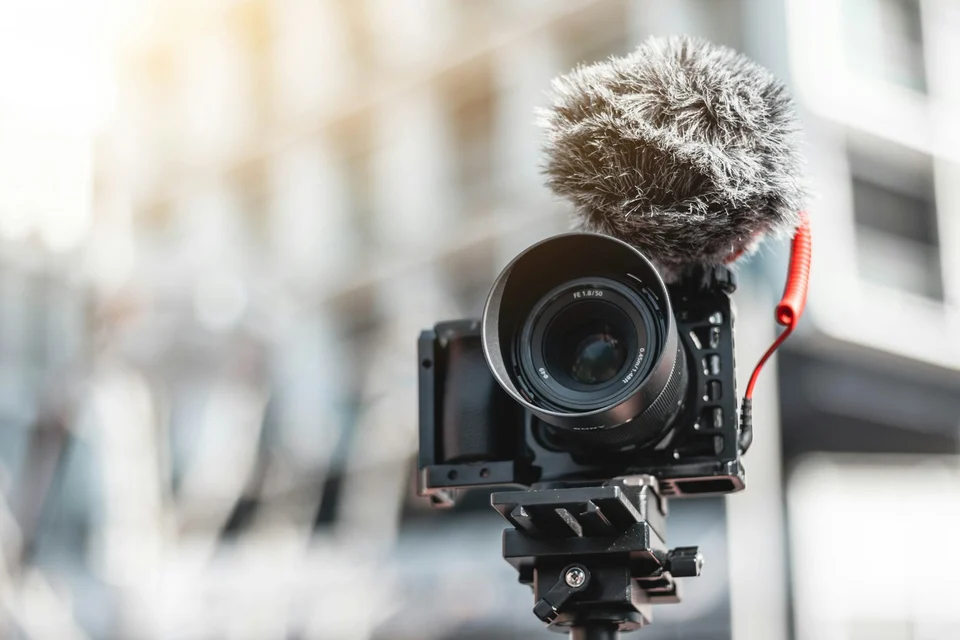
Imagine researching whether a camera can record a full event without overheating. A summary lists the model, resolution and an apparently reassuring recording time. The decision-carrying claim is the recording limit under your intended conditions.
Open the cited manufacturer documentation or relevant test. Check the resolution, frame rate, temperature, power arrangement and whether the stated duration is continuous. If the source tested a different configuration, the summary may have answered a nearby question rather than yours.
This is a hypothetical buying example, not a product test. It illustrates a method: identify the condition under which a claim is true. The more specific your planned use, the more important those conditions become.
For a software question, the missing condition might be account tier or operating system. For travel, it could be your nationality and travel date. Do not let a generally correct sentence stand in for a specifically applicable answer.
Understand what a citation can and cannot do
Google describes AI Overviews and AI Mode as systems that may issue multiple related searches across subtopics and sources when composing a response. It also notes that the features can use different models and methods and therefore produce different answers and links. Google's explanation.
A collection of links can be valuable, but it does not remove the need to inspect the relationship between a sentence and its supporting page. Is the page making that claim, quoting someone else or discussing an exception? Does it contain the number in the summary? Has the writer combined statements that refer to different dates?
Look for the relevant passage, rather than treating the presence of a familiar organisation's name as sufficient confirmation. A source can be credible and still fail to support the particular sentence attached to it.
Use three levels of checking
For a low-consequence question, such as finding the name of a concept, the summary may be enough to continue exploring. You can verify more deeply if you later use the answer in an argument or decision.
For a purchase, work task or public statement, inspect the decisive source and one meaningful alternative. The alternative should test a weakness: a different assumption, a limitation or contrary evidence. Two sites repeating the same announcement do not add much independent support.
For a decision involving significant health, legal or financial consequences, use authoritative sources and qualified advice appropriate to your circumstances. A search summary is an entry point, not an individual assessment.
These levels are a suggested reading discipline, not a guarantee of accuracy. Their purpose is to spend attention in proportion to the consequences of being wrong.
Ask a better follow-up question
Instead of asking the assistant whether it is sure, ask what would change the answer. Request the original source, the relevant date and the condition under which its recommendation fails. Then open the cited material yourself.
A useful follow-up in the camera example would be: “Which source supports continuous recording in this mode, and what temperature was used?” That is more informative than another polished paragraph repeating the original verdict.
Keep a short note for decisions you may need to explain later: claim, source, date checked and unresolved limitation. You are creating a traceable reason for your choice, not a scrapbook of every search result.
AI search can make discovery faster. Preserve that benefit while retaining the one step that gives the answer its value: checking whether the evidence actually fits the question you need answered.
Sources & further reading
- Pew's findings and methodology — checked 2026-09-29
- Google's explanation — checked 2026-09-29